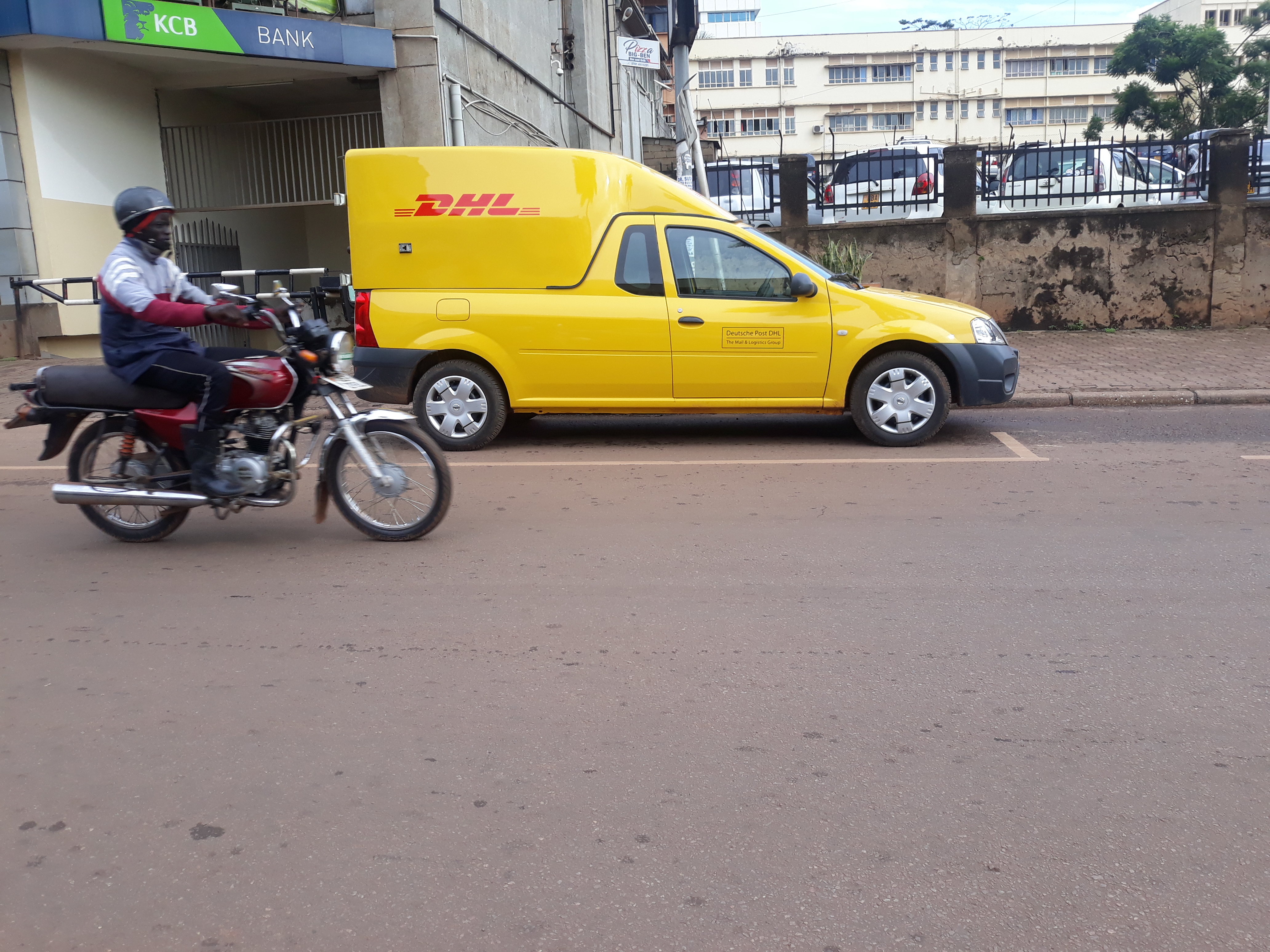
The last mile — the segment between a parcel's final sorting hub and its recipient — is consistently the most resource-intensive part of the delivery chain. In Poland, three delivery models currently handle the bulk of domestic parcel volume: attended home delivery, automated parcel lockers (APL), and pick-up and drop-off (PUDO) points at third-party retail locations. Each model has a different cost structure, failure rate profile, and recipient experience.
The last mile accounts for an estimated 41–53% of total logistics cost per parcel in Poland, depending on delivery density and geography. Source: Poczta Polska operational reports and GS1 Poland logistics indices.
Home delivery: the standard model
Attended home delivery remains the default option for most carriers operating in Poland. A courier visits the recipient's address during a defined time window — typically a 4-hour slot communicated by SMS or app notification — and hands the parcel directly to the recipient or an authorised person.
The principal operational risk is the failed first-attempt delivery. If no one is available to receive the parcel, the courier must either leave it with a neighbour (where permitted by the consignor's instructions), deposit it in a safe place with photographic evidence, or return it to the depot for a re-attempt. Industry data from Polish carriers suggests first-attempt success rates range from 68% to 82% for residential addresses, with lower rates in high-density urban apartment buildings where access requires a key fob or concierge.
Dynamic time windows
Several carriers, including DPD Polska and DHL Parcel, have moved to dynamic time window systems that narrow the estimated arrival to a 1–2 hour range on the day of delivery. These systems use route optimisation algorithms that recalculate windows as the courier progresses through the day's sequence. Recipients can follow real-time courier location in the carrier's app.
Redelivery and depot collection
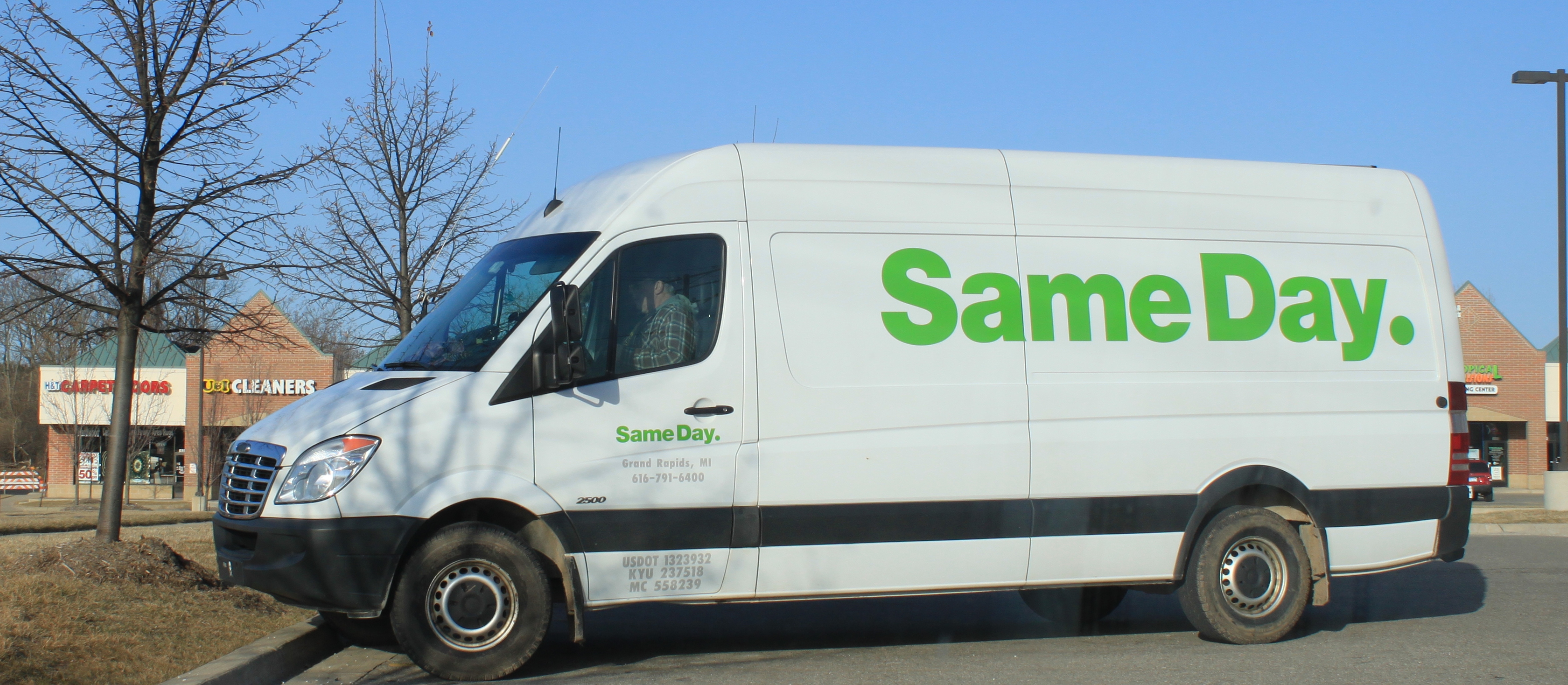
After a failed first attempt, carriers typically send a notification offering the recipient a choice between scheduling a redelivery, redirecting the parcel to a locker, or collecting from a depot or PUDO point. Most Polish carriers allow up to three delivery attempts before returning the parcel to the sender.
Automated parcel lockers
Automated parcel lockers — referred to in Poland primarily by InPost's Paczkomat brand — have grown from a niche alternative into a mainstream delivery channel. As of early 2026, InPost operates approximately 21,000 locker stations across Poland, with combined capacity exceeding 400,000 compartments. Other locker networks are operated by Allegro (One Box), Orlen (Orlen Paczka), and several smaller operators.
How locker delivery works
The consignor or recipient selects a locker station as the delivery address. The carrier deposits the parcel into a vacant compartment and the system sends the recipient an access code by SMS or push notification. The recipient opens the compartment using the code — either by entering it on a keypad or scanning a QR code — and retrieves the parcel at any time during the station's operating hours. Most stations operate 24/7.
- First-attempt success rate: effectively 100% for correctly addressed locker shipments
- Average recipient collection time: 14 hours after deposit
- Storage limit before return: 48–72 hours depending on operator
- Parcel size constraint: compartment depth typically 60–70 cm, width 40 cm, height up to 40 cm per tier
Locker placement strategy
Locker stations are positioned based on catchment analysis — the distance a median recipient would need to travel to reach the nearest station. InPost's stated target in urban areas is a maximum 5-minute walk. In smaller cities and towns the target extends to a 10-minute drive. Stations are commonly placed at petrol stations, supermarket car parks, and housing estate entrances.
PUDO points: retail-integrated delivery
Pick-up and drop-off (PUDO) points are third-party retail locations — tobacconists, newsagents, petrol stations, pharmacies — that accept and hold parcels on behalf of carriers. The shopkeeper receives a parcel, logs receipt in the carrier's app or terminal, and holds it for the recipient to collect during normal opening hours.
PUDO networks offer broader geographic reach than lockers at lower capital cost, since no dedicated infrastructure is installed. The trade-off is variable service quality and limited opening hours compared to 24/7 lockers. DPD operates the DPD Pickup network of around 6,000 points in Poland; GLS Poland and UPS also maintain PUDO networks of comparable scale.
Return shipments
PUDO points also function as drop-off locations for return shipments. A customer bringing back an e-commerce order hands the parcel to the shopkeeper, receives a receipt, and the carrier collects on a scheduled run — typically daily in urban areas, every 2–3 days in rural locations. This makes PUDO networks particularly relevant for fashion and electronics categories where return rates are high.
Comparing the three models
No single model dominates all shipment types. High-value or fragile items tend to remain in the attended home delivery channel where proof of receipt and recipient identification can be confirmed. Standard e-commerce parcels are increasingly flowing toward lockers and PUDO points, which reduce the operational cost of failed attempts. Time-sensitive and pharmaceutical shipments require home delivery with specific handling conditions.
For carriers, the economics favour directing as much volume as possible to lockers and PUDO, where the cost per successful delivery is materially lower than for home delivery — particularly in low-density residential areas where a courier may need to drive several kilometres between stops.
For GS1 barcode and shipping label standards relevant to last-mile delivery, see: Shipping Label Standards and Courier Network Structure.
Regulatory context
Postal and parcel delivery in Poland is regulated by the Act of 23 November 2012 (Prawo pocztowe) and overseen by the Office of Electronic Communications (UKE). The regulation establishes requirements for delivery timeframes, complaint handling procedures, and the conditions under which universal postal service obligations apply. Most private courier operators are classified as postal operators and must register with UKE.
The European Commission's Regulation (EU) 2018/644 on cross-border parcel delivery services introduced price transparency requirements and requires carriers operating above certain volume thresholds to submit tariff information to national regulatory authorities annually.
Summary
Poland's last-mile landscape in 2026 is characterised by a shift toward unattended delivery channels — lockers in particular — driven by the economics of failed home delivery attempts and the recipient preference for flexibility. Home delivery retains its position for categories where personal handover matters. PUDO networks fill the geographic gaps where locker density is insufficient.
Understanding which model applies to a given shipment type, and how carriers route exceptions, is relevant to anyone working with Polish fulfilment operations or domestic distribution planning.